

 |
How stories remind us of the need for connection |
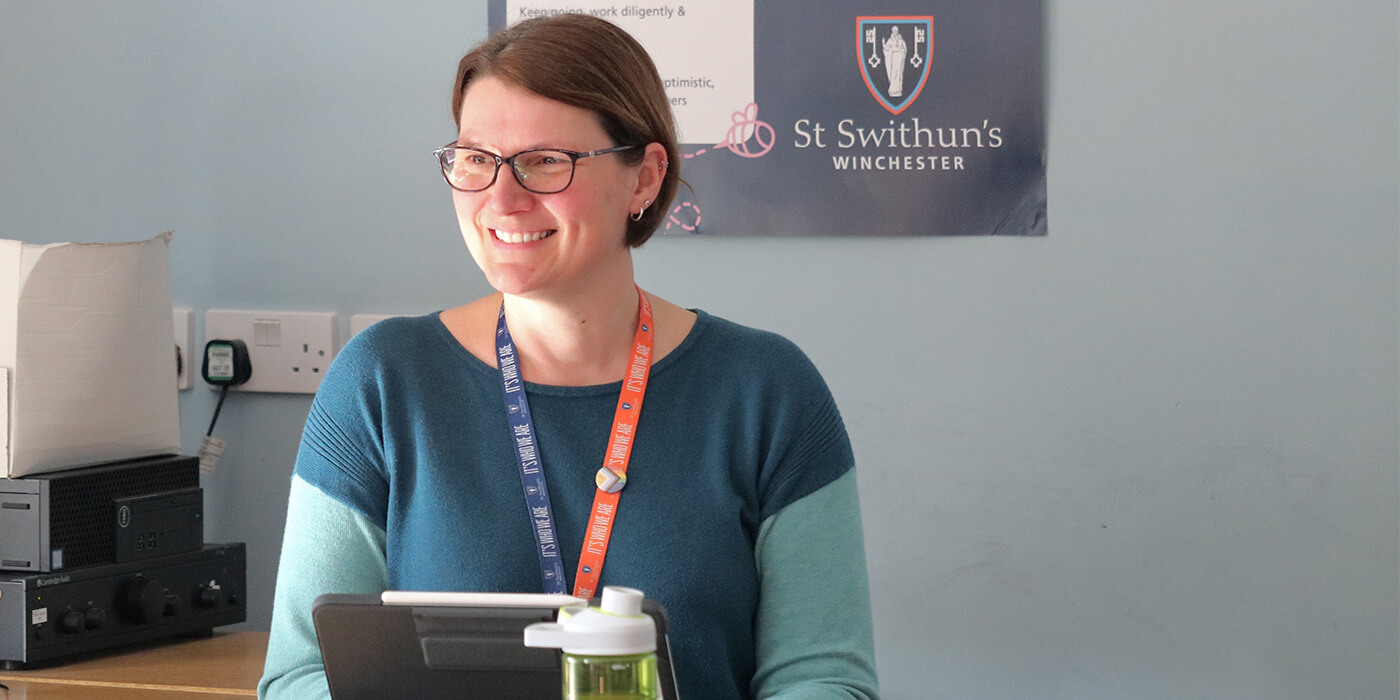
In a recent senior school assembly, history teacher and head of staff professional learning and dev, George Manville, invited students to reflect on the human need for connection and how it shapes the way we relate, learn and grow. She highlighted the comfort and meaning found in shared experiences, including something as simple as being read to. She used a series of literary extracts to demonstrate how relationships lie at the heart of storytelling and of being human.
George also explored how social connection is deeply rooted in our biology, influencing our sense of safety, confidence and wellbeing. She summarised her point through three key terms she views as essential reminders in daily life: collaboration, societal awareness, and confidence. She encouraged students to practise authenticity and compassion as foundations for building sincere relationships.
Below, you can read the full text of the assembly exactly as delivered, for those who would like to explore her reflections in more depth:
"I’ve been reflecting on yesterday’s assembly .
For a start I loved being read to - I’ve always loved being read to. I was most fortunate that my mum read to me well into my teens, admittedly because she wanted to compensate for me not being a particularly keen reader. It really was a wonderful way to start the day.
Secondly, it struck me that all the extracts we listened to, centred around interaction between different characters – whether that was aunts and nephews, children in the classroom, even sheep. Indeed, the majority of novels, possibly even all, feature and revolve around interaction between different characters. Even if the novels are about animals, they have been anthropomorphised so that they interact with other animals in a human way.
Why is that? I think it’s because that’s what we as humans like to read, it’s what we care about. One of the reasons why I like being read to is that it affords connection between me and the narrator. Our need for social connection is rooted deep within us biologically, as individuals, and also as a species. That’s irrespective of whether you are introverted or extroverted. I am introverted – I am very happy with my own company and find being around other people for sustained periods of time exhausting and draining; still, I seek and need social connection.
Humans are hardwired to interact with one another and research has shown that meaningful social connections are linked to improved physical and mental health. They can reduce anxiety. And can help to improve self-confidence and self-esteem. And they can enable us to feel safe and secure.
Thinking about the words we’ve just sung in the hymn – I know it’s God saying ‘I am at your side’ and God isn’t exactly human and you may not believe in God. Nevertheless, the point is that we feel reassured when we are not alone, when we have someone by our side. Feeling safe and secure in turn enables us to be more productive.
The advantages of forming social connections and working together in groups are readily apparent. Human cooperation and collaboration have resulted in complex social, cultural and technological innovations, from the internet to modern medicine. I suspect that even when we associate developments and innovations with a particular person, they were never operating truly alone.
And while many things about the future are unknown, one thing is for certain: human connection is going to be vital; we’re going to need to continue to work with others.
Something I was reading in preparation for this assembly said that neuroscientists have discovered that our brains have a default mode to see the world socially, preparing us for our next interaction with the thoughts, feelings and intentions of other people.
And that humans have evolved the feeling of loneliness as a warning sign if our basic human need for social connection is not being met, similar to feelings of hunger and thirst when we need food and water.
So, interacting with others is a biological necessity.
Given that, it’s interesting that interacting with others is often not straightforward. It’s something that we learn and, like so many things, get better at with practice, specifically with deliberate practice.
Ms Gandee reminds us often to stop and think before we speak: is it true, is it kind, is it necessary? This is because our interactions with others are not always as productive and supportive as they could be. Why is that? Because our egos get in the way. Because for all that we need connection with others, all of us are also navigating our relationship with ourselves.
I have in mind the 3 empathetic behaviours: Collaborative, concerned for society and confident.
As you can see, collaborative is about how we interact and work with each other.
Concerned for society is being interested in others and their experience, ‘walking alongside’ them, and respecting different experiences and values.
Being confident means being able to stand up for ourselves, not feeling threatened by others; it’s about knowing who we are and loving who we are.
When we love ourselves, we can be authentic and therefore we can connect genuinely with others. We’re not in competition with anyone else because we’re ok with who we are and we know that we’re good enough, valued, loved.
In those moments when we say or do something that isn’t kind about or to someone else, or when we’re annoyed by someone else, it’s actually because we feel insecure; the issue that we have is with ourselves, not with the other person.
E.g. someone has said to me that it would have been helpful for some information I’ve given out to be given earlier; I get very annoyed with that, I defend myself vociferously (in my head); the reason why it irritates me so much, and why then sometimes in my head I start berating the person who’s said something to me, is because I’m cross with myself; I know that I could have done better.
By the way, knowing who we are, loving who we are, being ok with who we are – these are a lifetime’s work. I know this because I am still working on them.
It takes lots and lots and lots of different experiences and interactions with lots and lots and lots of different people in lots and lots of different situations to really know yourself.
We all have insecurities; I certainly do. I think it’s about being ok with and loving those insecurities; because they contribute to making us who we are, the beautiful people that we are.
So, as you go about your day, the rest of the week, the rest of the term, fundraising Thursday, love yourself, be true to yourself, be genuinely interested and supportive of those around you. Together we will achieve wonderful things."